New blog from Fair Finance Ghana: Strengthening the Legal Capacity of Mining-Affected Communities
This blog is by the Center for Public Interest Law (CEPIL); a member of the Fair Finance Ghana coalition
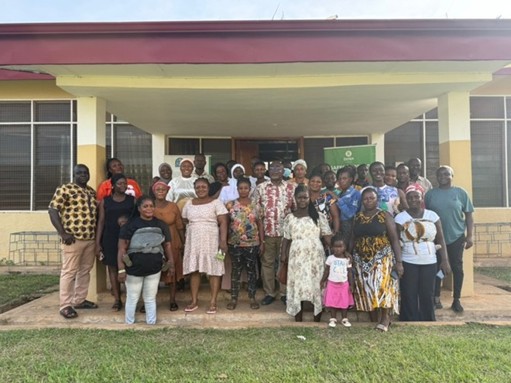
On 16 December 2025, the Center for Public Interest Law (CEPIL) convened a Legal Literacy Training on Mining Frameworks and Compensation Rights for mining-affected communities in the Ahafo region. Hosted at the Asutifi North District Assembly Hall in Kenyasi, the session formed part of the Fair Finance Ghana project funded by Sweden’s development agency Sida through Oxfam Novib and Oxfam in Ghana.
Background and Purpose
Ghana’s mineral-rich zones continue to experience land acquisition pressures, compensation disputes, and environmental impacts arising from mining operations. Although provisions exist within the Minerals and Mining Act and related environmental laws, many affected communities struggle to navigate compensation procedures, documentation requirements, and grievance pathways.
To bridge this knowledge gap, CEPIL delivered a community-centred legal literacy intervention designed to build understanding of land rights, Free Prior and Informed Consent (FPIC), compensation standards, and negotiation processes. A total of 39 participants comprising 25 women and 14 men including farmers, land custodians, youth leaders, and persons with disabilities took part in the one-day training.
Key Themes and Insights From the Training
The facilitation demystified legal provisions governing mineral exploration and land acquisition. Participants openly shared experiences regarding pressure to sign documents, lack of consultation, delays in compensation, and weak enforcement of environmental safeguards.
Discussions highlighted several core themes:
• Land Ownership and Consent: Participants unanimously affirmed customary rights and the need for community-wide consultation before mining activities.
• Free, Prior and Informed Consent: FPIC was identified as a major gap in practice, underscoring the need for stronger collective action.
• Documentation and Evidence: Facilitators emphasized practical documentation tools including photographs, videos, survey plans, and record-keeping to protect community interests.
• Compensation and Negotiation: The training clarified that compensation is a legal obligation and must be fair, adequate, and prompt.
Strengthening Community Agency
Pre and post training assessments demonstrated measurable improvements in legal awareness, confidence levels, and willingness to engage duty bearers. Participants expressed strong intentions to educate peers and family members on mining rights and compensation procedures, creating an important multiplier effect for community voice and accountability.
One participant reflected: “Now I understand what it entails before I sign anything.”
Another added: “I will use these laws to teach my community.”
Contributing to the Fair Finance Agenda
By equipping communities with legal knowledge and tools for informed engagement, the intervention directly supports Fair Finance objectives related to transparency, accountability, and responsible resource governance. The session reinforced the importance of sustained legal literacy as communities continue to interface with mining companies and state institutions.
Looking Ahead
The training concluded with calls for continued support on documentation, negotiation, and access to redress mechanisms. CEPIL will continue to share lessons, support follow-up engagements, and amplify community voices through communication channels under the Fair Finance project.
To enhance visibility, highlights from the session including participant testimonials and learning outcomes were shared on CEPIL’s social media platforms to raise awareness on FPIC, compensation rights, and responsible mining practices.